ISSUE 15 - JUNE 2017

CONTENTS
A frightening, and yet still hopeful, view of the current political stage in this New Yorker editorial.

I'm reading BreakBeat Poets: New American Poetry in the Age of Hip-Hop, and was thrilled to see a poem from Lavender Review in there: Marty McConnell's Object.

Submissions for the Headmistress Press Charlotte Mew Chapbook Contest are NOW OPEN! SUBMIT!


Mary Meriam, Editor
Lavender Review

ISSUE 15 - JUNE 2017 - CONTENTS


POETRYART
JOY LADIN
Not Unlike


TAMARA K. WALKER
Vines

STEPHANI MAARI BOOKER
Nowhere home

FREESIA MCKEE
Letter to Emily D.; Home

RISA DENENBERG
Faith Healing . . . 

KAMRYN KURTZNER

Something We Almost Forgot 

SAMANTHA PIOUS
Mrs. Danvers and I

CHARLENE ASHLEY TAYLOR
shipwreck

DONIA MOUNSEF
Tilted Ladders

MARIGO FARR
Post Election, 2016: A Comrade Hosts Me

WREN TUATHA
Wicker Me; The Memory of Snow

SARAH ROEBUCK
Learning to kiss a woman

LYNN LEVIN
My Hours; Offering One’s Hand to a Stranger

KALI LIGHTFOOT
First Day in the Wilderness Area . . . 

BAILEY WORKMAN
This Isn’t Me Anymore
ROXANA HALLS
The Suspended Room (2012)

SARAH SOLE
That Day In Our Dinghy (2015)

ANNE BENTLEY
Pauli Murray (2017)

JOANA TOMÉ
Sweethearts (2014)

KATHY RUDIN
Do u c? (2015)

EDITH LAKE WILKINSON
Untitled (c. 1918)

WINSLOW HOMER
Summer Night (1890)

GEORGE BARBIER
Illustration for Les Chansons de Bilitis (1929)

DORRIT BLACK
The Bridge (1930)

FRANCES BENJAMIN JOHNSTON
Florence Fleming Noyes (ca. 1900-1915)

CHRISTINA SCHLESINGER
Slow Dancing (1994)

LESBIAN STREET ART


AUBREY BEARDSLEY
The Peacock Skirt (1893)

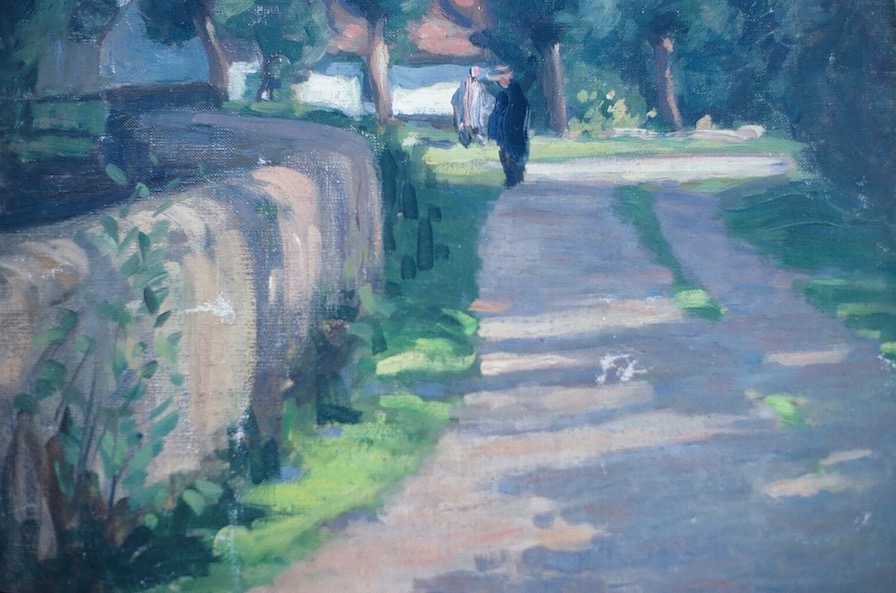
KATE MCKINNON
as Dr. Jillian Holtzmann in Ghostbusters (2016)

FLORENCE WYLE
Florence Wyle (1881-1968)


Joy Ladin

Not Unlike

I am not not, I am not un-, I am not unlike
a forgotten word
balanced on the tip of a tongue,

I do not dis-identify
with sparrows, snow patches, unpopped corn or unpresiding presidents,
I am not unsympathetic

to the melting of icecaps,
I neither confirm nor deny
the moral implications

of the disingenuous empiricism
from which I cannot detach myself
as I attempt to disentangle

filial assumptions from the flesh
of the son who turns away when I wave,
nor can I readily distinguish

the privileges of walking the earth,
earning, owing, giving and forgiving,
from the privilege of standing at the intersection

of subjectivity and subjection,
smiling at babies, singing psalms, confessing my racism,
telling a story that is not unlike my life

to a sky as distant as the ear
of the man my young son loved
when I was not unlike his father.


Joy Ladin is the author of seven books of poetry, including Lambda Literary Award finalists Impersonation and Transmigration, and Forward Fives award winner Coming to Life; two new collections, Fireworks in the Graveyard (Headmistress Press) and The Future is Trying to Tell Us Something: New and Selected Poems (Sheep Meadow Press) are coming out in 2017. Her memoir of gender transition, Through the Door of Life, was a 2012 National Jewish Book Award finalist. She holds the David and Ruth Gottesman Chair in English at Stern College of Yeshiva University, and her work has been recognized with a National Endowment of the Arts fellowship and a Fulbright Scholarship. Click here to preorder Fireworks in the Graveyard from Headmistress Press.

Roxana Halls

Roxana Halls The Suspended Room (2012) © Roxana Halls
Oil on Linen, 110 x 120 cm

Tamara K. Walker

Vines


Tamara K. Walker resides in Colorado and writes short fiction, often of a surreal, irreal, magical realist, slipstream, experimental, speculative or otherwise unusual nature, and poetry, often  in originally East Asian forms.  Her fiction has appeared in The Cafe Irreal, A cappella Zoo, The Conium Review, and Melusine, among others.  Her poetry has appeared or is forthcoming in Star*Line, indefinite space, Ribbons: Tanka Society of America Journal, LYNX: A Journal for Linking Poets, and others.  Her short story, "Camisole", was a 2015 Pushcart Prize nominee.

Sarah Sole

Sarah Sole That Day In Our Dinghy (2015)
Acrylic on canvas, 50in x 50in

Stephani Maari Booker

Nowhere home

“They tore all the projects down, girl.
Ain’t nothin’ of where you lived there now.”

I drove out to the north end of town
to see where I once had to live.

The northbound street led to a long eastbound road.
Watching the north side of the street pass by my window,
I still looked for the changeover from real houses
to projects.

This main street leads to nothing.
Beyond the real houses now lies a barren, brown land.
The lot looks so small, narrow and ragged.

The community center is still there—without a community.
The housing commission is still there—without the housing.
You used to couldn’t see both buildings at the same time.

The space between the official buildings used to be filled
with rows and rows of two-story vinyl-covered, metal-doored
rectangular blocks of domiciles.

To the south, wire separates a rail yard from what used to be.
To the north, the hazy grey spires of the auto plant.

I know there aren’t enough kids living in the real houses
to fill up the local elementary school.
I’ll bet nobody’s crossing the catwalk over the freight trains
to go to the junior high.

Where I had to live
wasn’t a real house,
never felt like a home.

Now I know I was right—
When I was a child
I lived at nowhere.


Stephani Maari Booker’s poetry has been published most recently in Off the Coast, Adrienne: A Poetry Journal of Queer Women, and The Voices Project.

Anne Bentley

Anne Bentley Pauli Murray (2017)

Freesia McKee

Letter to Emily D.

I was the parking cop with limited jurisdiction. I was the professional association with a failing membership. I wasn’t even sleeping with the enemy and I was making a matter of cents. On the dollar, I mean, so go ahead and give them the D., Emily. My mouth was full of plastic and gushing water. I came out at the dentist’s office and they started asking about my job. I said that I cook steaks and she lifts weights. She drives the car and I wash dishes. I hit the gas with my queer ankle to go for a drive. I told them women have an awful lot of choices.


Home

The want for you
screams loud like a trumpet,
like a prairie wind.
Inside my room, windows
chain and clank
and the record spins on.
You’re like a single
book I read over and over
again. I turn the page
on its brass elbow
and your words sing through
all my walls.


Freesia McKee is a working poet. Her words have appeared in the Huffington Post, Verse Wisconsin, Gertrude, Painted Bride Quarterly, Burdock, PDXX Collective, and Sundress Press's Political Punch anthology. She co-hosts The Subtle Forces, a weekly morning show on Riverwest Radio in Milwaukee.

Joana Tomé

Joana Tomé Sweethearts (2014)
Pen on paper

Risa Denenberg

Faith Healing at the MB Caschetta Writers Group Retreat

We scribble in desperation, words trickle or gush from cut
jugulars. We write to heal, but writing doesn’t cure, it congeals.
We drown and breach to retrieve our own sacred essence.

Alone, each treads the stations of a private cross. We fear everything
known, and then, the unknowable. Failure, rejection, success.
We don’t know what will be said about us, we fear gossip

derision, unkind reviews. We eat meals together, sisters
confessing our slightest sins, hoping to be forgiven.
We admit we have too often failed to forgive.

In the evenings, we share the words we have managed
to wring from tapped-out psyches during daylight. The
night welcomes us to rest, we lie on couches, drink tea.

On our last night, without a script, we enter a state
of grace and perform faith healings for one another.
We lay on hands, pray, offer blessings.

The road home looms ahead as daunting as the road
we took to get here. There is still much to dread.


Risa Denenberg is a working nurse practitioner and poet. She is a co-founder and editor at Headmistress Press, a small independent publisher of poetry by lesbians.  She has published three chapbooks and two full length books of poems, most recently, Whirlwind @ Lesbos (Headmistress Press, 2016). Her collection A Slight Faith is forthcoming in 2018 from MoonPath Press.

Kathy Rudin

Kathy Rudin, Do u c? (2015)
Mixed media collage on paper

Kamryn Kurtzner

Something We Almost Forgot

I can hear the pavement
crying our first
real moment with the sun
           in what seemed like years.

It had begun to crack at
the weight of frozen white
kisses from above
           trapped, black -
clouding our sights and smiles.

Everything has been bathed
in yellow, from our eye lashes
to the bottoms of our naked heels
           looking for mud puddles to
soothe our aching souls.

I can hear the birds through my
eyelids again, fingertips pulling
at mother nature’s hair,
lacing together rings
           to announce our love
for summertime friendship.


Kamryn Kurtzner is a poet residing in Palo Alto, California. She has been published in See Spot Run, The Pine River Anthology, and Rat's Ass Review. 

Edith Lake Wilkinson

Edith Lake Wilkinson Untitled (c. 1918)
© The Estate of Edith Lake Wilkinson
Film about Wilkinson

Samantha Pious

Mrs. Danvers and I

put out at dawn aboard Rebecca’s boat
and, sails bent on, un-moored and set a course
south by southwest about the Roseland Coast.
We made good time to Coverack, where we docked
and purchased fuel, rations, tools, and twine,
then, casting off again, tilled hard alee,
and, battening down, made ready for the storm.
The lighthouse, thankfully, was burning bright.
Rough seas and foul. Cabin sole awash.
By miracle we rounded Lizard Point
which, having sighted steam north by northeast,
we had determined, rashly, to accomplish
that very night — though ancient mariners
had warned, first laughing, then in grave concern,
it might not be attempted on their lives.
We shortened sail. Hove to. I slept
as soundly as one could, and was awakened
past daybreak, to clear skies, the scent of ham
and eggs, calm seas, and Mrs. Danvers’ kiss.
Once underway, we put about and stood,
stood, steady as she goes, for Llangollen
or rather up the Channel and the Severn
toward Gloucester and the Cotswalds where we came
to port and land. Abandoning the boat,
from there to Birmingham we went by train.
We must have looked a sight, we two, alone,
our windswept hair, our salt-stained, still damp clothes,
our faces wild with staggering from the sea!
From Birmingham we caught the east-bound train
toward Holyhead, alit at Ruabon, and thence we strolled,
like ladies, newly combed and freshly pinned,
along the winding lanes toward Llangollen.
The village, then as now, does not impress.
We took a room in town and dined alone.
Next day we searched for lodgings. There was one
quaint cottage we particularly loved,
almost a ruin, lonely, overgrown
with roses, vines, and mosses … In the end,
we had not funds enough to rent the place.
We chose a home in Llantysilio
three miles off and, winter fast approaching,
began the work to keep each other warm.


Samantha Pious is writing her dissertation in Comparative Literature at the University of Pennsylvania. Her first book, A Crown of Violets (Headmistress Press, 2015), offers a selection of translations from the poetry of Renée Vivien. Some of her other translations and poems have appeared in Adrienne, Mezzo Cammin, Queen Mob's Teahouse, and other publications.

Winslow Homer

Winslow Homer, Summer Night (1890)

Charlene Ashley Taylor

                                                shipwreck

the harpy trembles with a distant rhythm

pulsing and scratching at the curl of my ear

she sheds her skin to unravel the scales

revealing muscle and bone wound with salt

she breathes into the nape of my neck

teeth tilling the weave of tiny hairs on end

I close my eyes to the siren

as she whisks heat between wings


tongue as obelisk her chassis morphs


to birth spikes like snapdragon petals

nectar creeps from a curved lip

down my chin to pool in my palm

mouth tethers plexus to belly, hip to thigh

body as beacon I grip the gulf of her

clutching flesh to force us into the shore


Charlene Ashley Taylor has a BA in English and is currently a Graduate Teaching Assistant at the University of Louisville. Her work has appeared in Limestone Journal, Coe Review, Transcendent Zero Press, The Bitter Oleander, The Chaffey Review, Yellow Chair Review, Spry Literary Journal, and elsewhere. She is also a Graduate Editor with Miracle Monocle and the founder of Louisville’s newest reading series River City Revue.

George Barbier

George Barbier, Illustration for Les Chansons de Bilitis by Pierre Louÿs (1929)

Donia Mounsef

Tilted Ladders

                    The siege is a waiting period
                    Waiting on the tilted ladder in the middle of the storm
                                                                          Mahmoud Darwish

Hanging suspended on bridges to nowhere,
below, a fast moving river that may or

may not dump in the Atlantic, how should I know?
geography retires when you’re transient.

Leonard Cohen wailing from the one
working speaker... it must be illegal to feel this way,

between two lands, two homes, two guarded duty frees,
where you can buy cigarettes and rum, but no smile.

I am in a state of siege between two borders,
following orders to move or stay, go or wait,

advance, retreat,
by a dog and his human in riot gear.

A 49th parallel paralleling patrols of petrified purity,
his jaws is our fate,

he wanted to know how we relate,
“How are you associated? MA’AM?”

“Partners,” I said to soothe his homophobic discontent.
“Like, business PARTNERS?” he asks,

“No, like bed partners,” I replied.
He feels more justified than ever to dislike

this unruly dyke who is about to be arrested
for thinking of your breasts on the Rainbow Bridge.

They are exceptionally perky perched
persnickety in my punctilious right palm,

a controlled substance, a forbidden delight, a slight
of hand for the grand chief of this land.

You and I are big sista’s terroristas, laying in wait
in the eye of two storms, fueling the twista’,

drafty dodgers, conscious resisters,
the salt in the cake,

the bleeding raw steak, the reason the law
gets out of bed in the morning.

You, at least, were born in New Scotland,
on a beach engraved on red fifty-dollar bills,

me, I am naturalized Canadian,
unnatural, denatural, endentured to a document

24 pages long, with the head of the Queen,
and her heirs, I must swear to,

staring sanctimoniously at my sacrilegious dare.
I was flung into this world in the seventh city

of jasmine and incense, on a rocky shore,
the pearl of the orient

disoriented, rented, indented, ointed,
with cedar bark from a holy valley

of saints dancing among demons.
And I am bented, accented, can’t repent

from what torments them about difference.
They hide their non-sense behind loaded guns.

In a world governed by terror,
queer love becomes a form of resistance,

trapped between two stances,
two flags, two banks, two waterfalls, two watch towers,

two chances to fall into a raging river of hate,
jaw spurned, upturned, interned, churned

by the pure-bred German shepherd
with a charming white canine smile.


Donia Mounsef was born and lived in Beirut, Lebanon until the age of 19. She is a Canadian-Lebanese poet, playwright and dramaturge. She teaches theatre and poetry at the University of Alberta, Canada. She is the author of a poetry collection: Plimsoll Lines (Forthcoming from Urban Farmhouse Press), and a chapbook: Slant of Arils, published by Damaged Goods Press (2015), Her writing has been published and anthologized in print and online in The Bookends Review, Linden Avenue, Gravel Magazine, The Toronto Quarterly, Labor of Love, Bluestem, Yes Poetry, Gutter Eloquence, Poetry Quarterly, Skin 2 Skin, Iris Brown, Reverie’s Rage Queer People of Color Anthology, 40 Below Anthology, etc.

Dorrit Black

Dorrit Black, The Bridge (1930) 
Oil on canvas on board, 60 × 81cm
Courtesy Art Gallery of South Australia, Adelaide

Marigo Farr

Post Election, 2016: A Comrade Hosts Me
                                             Balton Street, Buffalo

This is the third time we’ve met and
you’re still polite.

Take my room, you insist.
The bed is soft.

Old oaks scratch your windows
in night’s first wind.
I’m still standing near the door
with my bags.

Have you been taking care?
I ask.

You smile, run your fingers through your hair.
Big eyes, for a moment, down.

Ya know, it’s been a hard year.
Take my room, you insist.
The bed is soft.

Cold whistles outside.
The furnace roars and
throats say only shy things.

Narrow steps creak.
I find the attic room
whitewashed wood in perfect
glow from the bedside lamp.
There is a window to the moon
and it is warm.

I think of you,
tossing and turning on
the cold leather couch.

But dry heat makes throats
say shy things.

Come with me,
they don’t say.
We can’t sleep alone.


Marigo Farr has been writing poetry and songs for as long as she can remember. First inspirations include her mother’s string quartets playing in the livingroom and her family’s land in the Berkshires. Later on, the quirky and independent writing community in Burlington, VT, and queer writers in NYC. She loves reading and writing poetry about love, loss, dreams, gender, queerness, home, and the natural world.

Frances Benjamin Johnston

Frances Benjamin Johnston, Florence Fleming Noyes (ca. 1900-1915)

Wren Tuatha

Wicker Me

Wicker me.
Bend me.
Weave me into a rocker and I’ll
wait on your porch with your
faithful dog Bart.

Some August night is our blanket.
Park your clogs
and I’ll rock you,
creak next to your skin,
cushion you into your ease.

Wavy pool of cricket songs
and horns out on the interstate.
Wicker me into a painting of this.


The Memory of Snow

The souls of women float just above the ground
as if walking on the memory of snow.
Ready to be air if struck, water if kicked,
stone if belittled, fire if ignored.

The souls of women laugh lightly in most moments,
beaming pinpoints through the skin. It makes you
want to touch. Priestesses and party dresses.

And so you touch. Shocked to find flesh, you
notice a bad memory. Soon each woman is the
same woman and her soul is bitter lamplight,
bitter, insatiable lamplight.

The souls of women reel and swoon with
art and moon and business meetings. They
encircle bitter sisters and float just above the ground
as if walking on the memory of snow.


Wren Tuatha’s poetry is designed to fit the small corners of the bulletin board in Heathcote Community's mill kitchen. It has also appeared or is upcoming in The Cafe Review, Canary, Coachella Review, Baltimore Review, Pirene’s Fountain, Loch Raven Review, Clover, Driftwood Press, Autumn Sky Poetry Daily, Bangalore Review, Burningword, and the anthology Grease and Tears. Wren is followed by skeptical goats on a mountain in California.

Christina Schlesinger

Christina Schlesinger, Slow Dancing (1994) 
oil on canvas; 18" x 18"

Sarah Roebuck

Learning to kiss a woman

Everything in me, everything I have,
I pour into this kiss.
But what do I know?
How do I know what to do?
And yet I know to press her hard against me,
shoulders to shoulders, breasts to breasts, belly to belly.

I touch her body,
and it’s my body that is touched.
For the first time
the most delicate surgings of my female appetite
are felt by another, then reflected back
into me in an instant—
like a reply to a question
that never needs to be asked.


Sarah Roebuck earned an M.A. at the University of Windsor. Her poetry has appeared in Understorey, Nashwaak Review, The Antigonish Review, The Maynard, Dalhousie, and Other Voices, among other places. Some of her short stories can be found in The Danforth Review and carte blanche. Her visual poems can be found on YouTube at Poetmonger. She teaches French and is involved in the anti-poverty movement  throughout Canada. She is a lesbian and a mother, and she lives in Toronto with her son, Teddy.

Lesbian Street Art

Lynn Levin

My Hours

All my life I have passed
through curtains of mist.
When have I lived and why?
I have spent so much
of my life in aimless hours—
lost in weeds, lost in flowers.

The rare bird of desire
once fed from my hand.
In my scattered way I seek it
still, old tormentor, old friend

then flee from its golden wings
its sharp little beak and watch
it fly in its wavy way
to the thistle that lets it stay.


Offering One’s Hand to a Stranger

At twenty-six, traveling for business
feeling important and proud, I sat on a plane
that pierced a storm cloud.
My coffee spilled and my tears.
I had just begun to meet my life
and now death barging in!

Then calm as the captain’s drawl
an older woman next to me
asked if I wanted to hold her hand.
There we sat dovetailed—
I floating in her peace.
I can barely express the comfort I felt
for if I were to die
I would not die alone nor would she
who from my depths uplifted me.


Lynn Levin’s most recent collection of poems is Miss Plastique (Ragged Sky Press, 2013), a Next Generation Indie Book Awards finalist in poetry. She teaches creative writing at the University of Pennsylvania.

Aubrey Beardsley

Aubrey Beardsley, The Peacock Skirt (1893)

Kali Lightfoot

First Day in the Wilderness Area, Mount Adams, Washington

It’s a long hike from the trailhead
to Looking Glass Lake, “lake” a misnomer
for this little tub of lava rock

catching rain so prettily in the foreground
of Mt. Adams. 12,000 feet of lonely glacier
hang there above the lake and me.

Never have I been here before this long day
in this green uniform with newly
minted badge and nametag, shining with

bravado only possible to the truly clueless.
Never alone like this, backpacking
all by myself, the sun setting

behind all that hard-packed snow
in 38,000 acres of wilderness.
Little alpine flowers cling

to the rock by the lake. I cling
to my tent pole, thinking too much
about the little pile of bear scat, blue

from huckleberries, bear-eaten joyfully
no doubt—was he ambling through this lovely
scene—sometime not too long before right now?

I am about to pitch this tent, a few hundredths
of a millimeter of ripstop nylon
between me and bears, wind, snow, rain, darkness

and myriad things that walk
in the night. A dead branch drops,
pings against the lava rock, spits itself

into Looking Glass the almost-Lake,
and startles me. Wide-eyed, I the almost-Ranger
wonder if I’ll see a second day.


Kali Lightfoot worked as a teacher, wilderness ranger in Washington state, executive at Road Scholar, and most recently as founding Executive Director of the National Resource Center for Osher Lifelong Learning Institutes. She earned an MFA in Writing from the Vermont College of Fine Arts in 2015 and her poetry has appeared in Illuminations 29, Mom Egg Review, The Wildest Peal: Contemporary Animal Poetry, Split Rock Review, Silver Birch Press, and received Honorable Mention in the Science Fiction Poetry Association national contest. She has written reviews of poetry for Bookslut and Green Mountains Review, and has work forthcoming in Solstice.

Kate McKinnon

Kate McKinnon as Dr. Jillian Holtzmann in Ghostbusters, Columbia Pictures (2016)

Bailey Workman

This Isn’t Me Anymore

abomination.
perversion.
satanic.
better dead than gay.
and my personal favorite,
“please kill yourself, you disgusting dyke cunt.”
i bear these stripes on my back,
but the blood they drew is purer than any priest’s
vial of holy water.
because your ‘god’ is a false fire, raging to destroy.
your tithes are lining Beelzebub’s filthy pockets,
i pay my wages to a brilliant force of love.
i am a fucking phoenix,
created from the ashes that fill your jug,
your dredges cannot contain me any longer.
the tainted pew tried to chain me,
but I have the freedom your choir
tried so desperately to starve me of.
i will eat my deserved fill,
and leave your poison to unconscious sheep.


Bailey Workman has been published multiple times, with her work appearing in Hypertrophic Literary, Rat's Ass Review, and FishFood Magazine among others. Currently, she attends UNC Asheville in pursuit of a Mass Communications degree.

Florence Wyle

Florence Wyle (1881-1968) 
Royal Canadian Academy of Arts / Library and Archives Canada / PA-103160